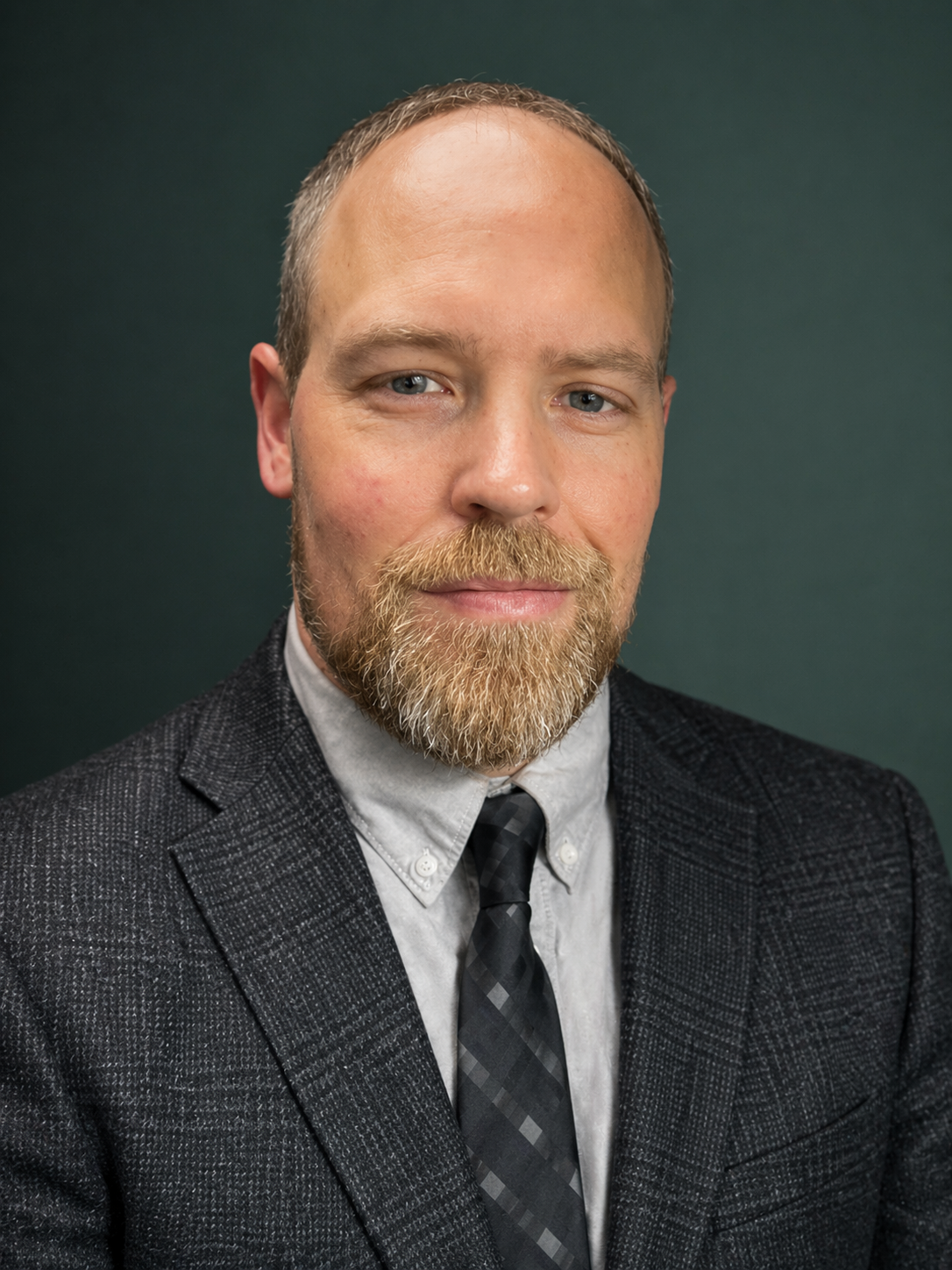
A Man's Hidden Eating Disorder — A Conversation with Christian Jensen (Ep.27)

An atheist meets a Christian girl who changes His life, yet the impact of his childhood trauma drove him into a devastating eating disorder. Learn how God heals and restores in the most loving and gentle ways by using people and His Word to transform a life.


On paper, he had it all together: dean's list student, All-American national champion athlete, the "good guy" everyone admired. Underneath? An angry atheist who lost his dad at 15, buried his grief to be "the man of the house," and hid a binge eating disorder that no one knew about.
Christian Jensen — a husband, father, non-profit executive — shares his powerful testimony about how God used strong Christians to turn him from himself and his own logic toward healing — not only from childhood trauma and the defeat of a hidden eating disorder, but into a devoted addiction to God and His Word.
His story expanded my insight: strongholds don't check your gender. And the enemy does his best work in the shadows.
In this episode:
• How losing his father at 15 turned Christian into a self-described "good atheist" — serving, achieving, and performing while unresolved trauma built up underneath
• The hidden binge eating addiction he carried for years — and why so many men are silently suffering with what we assume is a "women's struggle"
• The coffee shop girl whose first-date question was "What do you think about God?" — and why she refused to date him because Scripture warns believers not to be "unequally yoked" (2 Corinthians 6:14)
• The December night he physically could NOT pray — until he pulled over, fell to his knees on a Highway off-ramp, and surrendered his life to Jesus
• Bill, the builder who rebuilt more than a burned-down house — and the worn little New Testament that planted a seed years before it bloomed
• Why confession is the doorway to healing: "Confess your sins to each other and pray for each other so that you may be healed" (James 5:16)
• Christian's low-barrier first steps if you're still hiding a struggle: open a Bible, find one trustworthy believer, and just start talking to God — no script required
Here's the truth: as much as you think you're hiding it, God already knows. And He is not waiting to punish you — He is waiting with open arms. "With man this is impossible, but not with God; all things are possible with God" (Mark 10:27).
CONNECT WITH SARAH:
• Website: https://addictedtogodpod.com
• Instagram: @SarahAnnieSchneider — https://www.instagram.com/sarahannieschneider/
• YouTube: Sarah Annie Schneider | Addicted to God (subscribe!) — https://www.youtube.com/@AddictedToGod
• Facebook: SarahAnnieSchneider — https://www.facebook.com/SarahAnnieSchneider
• Substack: Sarah Annie Schneider — https://substack.com/@sarahannieschneider
#AddictedToGod #ChristianPodcast #ChristianTestimony #AddictionRecovery #EatingDisorderRecovery #MensMentalHealth #FreedomInChrist #BreakingStrongholds #JesusSaves #FaithJourney #NewBeliever #BibleForBeginners #GraceOfGod #ConfessionAndHealing #WithGodAllThingsArePossible
Sarah Annie Schneider: Yeah. Welcome to the Addicted to God Podcast. I'm your host and Bible mentor, Sarah Schneider, and I am addicted to God. Addicted to God is a community of imperfect people who are pursuing a deeper, more intimate relationship with God. For over 20 years, I've been on my own Addicted to God journey. This movement was inspired by the hundreds of incarcerated women whom I have mentored in my local jail. The more I learned about their addictive behaviors, the more I realized that my zeal to know God's Word isn't that different from their uncontrollable desire to use their drug of choice. So in a nutshell, Addicted to God is where we transfer the unhealthy, unsatisfying, and destructive habits and choices to the freedom and fulfillment that can only come from the one healthy addiction, and that is God and his limitless word. So please share this podcast so we can end addictions. encourage the defeated and help anyone who wants to have a relationship with God but doesn't know where to start. So let's get addicted to God together. Today I get the honor of introducing to the Addicted to God podcast my friend Christian Jensen. And Christian, thank you for being a part of our community. I'm excited. Thank you for having me. It is gonna be such an intriguing story. I know a little bit about you and a little bit about your background, but I am really excited to dig in. So please introduce yourself and give us a little bit of background on who's Christian Jensen. Yeah, sure. Number one, I'm a son of the king. I'm I'm a husband, I'm a father, and also just try to do the very best I can in my community to serve and and â support. I am currently the executive director of the Hope Clinic. kind of how we got connected. â but really professionally my whole life I've been in nonprofit work, started a couple nonprofits serving people with disabilities, â people with MS, housing, housing instability. Just have felt called, compelled to to serve people in those ways. And I'm someone as well who's â gone through some addiction. We'll get into that I'm sure when we get to my testimony. Haven't always been a Christian. Well grew up in the church but fell away from that. through some pain and some â some trauma and then had a season of life where I was in some darkness and thankfully God brought someone into my life that changed that perspective and humbled me and and â I've learned a lot and I'm still learning. Never stop learning. So Right. Yes. Life is a journey of learning for sure. The story about how you met your wife and your past â with regard to your faith in Jesus Christ. Tell us about that 'cause it's Amazing to me. Yeah. Well, so y grew up in the church. We had a Methodist environment, you know, just pretty much regularly going to church. And, you know, for me as a young person, it was just the thing we do every Sunday. usually falling asleep in service, get dressed up, you know, and then we'd go out to l brunch afterwards. So that was a thing we look forward to. So it was a it was more of a a ritualistic thing rather than a personal thing for us. Which I think is somewhat common for young people. Very much same as me. â especially if you're in a more of a traditional environment, which is not a bad thing, but just that's where we work. And â got confirmed when I was seventh grade. â yep, I believe in God. Sounds great, still not very personal. And â when I was â fifteen years old, my father we learned my father had cancer and that he would die. He did about six months later and As a young dude who has two sisters, I felt an incredible amount of pain, but also weight, â to try to do something that â I was not equipped to do and I no one asked me to do, no one told me to do, but for some reason I felt like I I needed to do, and that was kind of to be like the man of the house, right? Yeah, makes sense. And so I plowed through that. And when I say plowed, I mean I didn't do it right. I was it was really more out of anger than anything, angry at God and you know, when my dad died, I said, No way. There's no way there's a God And so at that time I was an atheist. But really I viewed myself as someone that was like a good atheist, right? Like, hey, like there's no God, but I'm gonna I'm gonna live my life really well. I'm gonna take care of myself. I'm gonna I'm gonna serve. I'm gonna help. I'm gonna, you know, be a good person, you know, because you don't need God for that. You don't need a Bible for that. Like that's that's what we should all be doing. That's the purpose of life, is this is to help people. Right. That was my mentality. And it'd be good, right? And so in many ways on the surface, â as I went to college, I was doing those things, you know, on paper, I was a I was a dean's list student. I was an all American national champion, track and field athlete. I was â you know, people would say, I think people would say, like, you know, he's a really good young man, right? Under the neath I ha underneath I had really a lot of unresolved emotion from losing my father. And â that was really building up inside of me. I never really dealt with it. I just buried it because I felt like my role in that was to really more â be there for my mom or my sisters and to just kind of bury that that burden in me. That was secondary, that was tertiary. It was not a primary thing. And so that was happening for years. And then after my fourth year of school, I was home, back home where I was from. in Lake Geneva, Wisconsin, and â we lost our house to a fire. Our the house completely was destroyed. And that that was one of those moments where it was it was kinda what like, all right, what am I doing with my life? And decided I wanted to change my major as a fourth year senior in college. And it ended up going from education to to exercise science. And then â that put me on the the near doctorate path, â but without a doctorate of of college. And and the summer before my final year, I was â I was just I was really struggling to I was like, gosh, you know, I I I wanted I was I was going through some loneliness, some depression and under the n under the surface I was also dealing with an eating disorder, which not a lot of men you hear from or will admit to that because that's what we do as men. And so I was dealing with that and hiding it. No one knew about it, but it was just my place that I would go to hide. Right. I was I was short short recovery in in those experiences. It was affecting me mentally, but it was also physically affecting me in many ways too. And â and so I was I was also at that time kind of going, Gosh, and I really wanted to like date someone? Like I feel like this is the time for that. And I was never really like a like a go out to go out to bars. kind of a guy, like I'm gonna meet a gal at a bar or anything like that, or a party, house party in college or you know. I I never really got into drinking a whole lot. It wasn't it's never really been a thing for me. So it's just not my thing. So I was like, you know, all right, so where am I gonna find a girl? Right? And so I'm I'm â I'm like all right, well I think I'm gonna find a gal, a great gal who's like maybe a little serious about life, a little different than I was at that point. Maybe a coffee shop or church. And here I was. I did not drink coffee and I was an atheist. I'm like, okay, this is my logic here. Right. And so I started going to coffee shops mainly to study, but also to kinda like scope out scope out gals. And a little downtown coffee shop in Oshkosh called Planet Burke and and started going there and noticed a gal that was working there and eventually started coming back and a and just kinda like throwing out the little signs and And then â and then she gave me a little response and that was like a confirmation of like, okay. And then and then I said, Hey, would you ever like to go out? She might tell it differently. She might say that she told me that, but we'll save that for another conversation. But we â we ended up going out, having a date, and â the first question she asked me was, Well, what do you think about God? And I was like, I got the answer for you. 'Cause I was very practiced in my mentality of that. And â we spent five hours walking, talking. She was very graceful in that. She was a very strong Christian. She had a group of gals around her who were really speaking life into her and and encouraging her. She grew up in the church as well, but, you know, like me, it was more traditional. It wasn't until she was a little bit older that she really developed that relationship with Jesus. And so we kept going out, we kept talking. She made it very clear after our first date that we were not dating. And she talked about how the Bible talks about being unequally yoked and how as believers you need to be careful of that because God calls marriage to be between â believers, man and woman. And I didn't get that. I didn't understand it. But I was like, Okay, well hmm, let's see how this goes. And so we kept dating and she was very patient with me. We would have a lot of debates. She would Give me books to read, â Case for Christ is one of those. And I was seeking under the surface. I think God was really humbling me. He definitely was. My my addiction was at at its worst point at that time. No one still knew about it, but I was in pain. â I knew the way that my life was going was not gonna turn out well if I kept doing that. And I was desperately yearning for something else, some sort of hope, some sort of change. And she saw in her life an opportunity, God was challenging her to just introduce me to that and to challenge me in those ways because she believed obviously that that healing can be done through Jesus. And â through â a number of conversations we had where I thought I would have gotcha moments with her, she kind of turned it around and really made me realize how How flawed my logic was on some of those things. And then eventually, â I'll never forget it. It was it was a December night. â we were driving in the car and and I was like exploring this faith thing, and I was just feeling something happening in me where I was like, gosh, there is some, there's some change. And I even was doing some prayer, this weird prayer thing, right? And I was talking to God, at least what I thought I was doing, never really done that formally. And She asked me, so how are you doing with this whole thing? And I was like, Well, I gosh, I I'm praying. I think I'm ready for something. And she's like, Well, have you have you actually said this prayer? Have you given your heart to Jesus? Have you taken that step, that act that that we're called to do? I said, No, but okay, I think I'm ready for that. And so we're driving in the car and â she's like, Here you go, go for this. And and I go, go to pray, and I literally physically cannot do it. Like I There's a block in my throat. Like I feel this like plug there where it's hard to breathe and hard to speak and I can't do it. I'm trying for like forty five minutes. It's a crazy experience. Yeah. And and then I start to like sweat and then I'm starting to like have shakes. It's crazy. It sounds weird probably to your listeners. But â I'm like, all right, I gotta pull this car over, right? 'Cause I don't know what's going on and probably a good idea. Yeah, I'm not I'm not fit to drive at this time. So I pull over, I get out of the car and I just fall to my knees on a off ramp off of Highway Forty One in Lil Myra. â I know where it is. Every time I go back past there I think about it. But I just fall to my knees and I just cried and I just wept and I released I released that and I just asked God to take it and to forgive me and and that I need him. I can't do this by myself. That all the things that I've been trying to do on my own, to be the man, to be the guy, to be the good person, none of it was working. On the surface it was, but underneath it wasn't. And that's what God cares about is my heart. And â that's when I accepted Jesus and â got back in the car. And my wife was kind of like, well, she wasn't my wife at the time. But but but she was like looking at me like, Okay, what's going on here? â so she witnessed this whole thing. She witnessed it. And she she encouraged it, right? So it's her fault. In a good way. In a good way. But so we of course kept staying together and because of course I made that decision and she saw that I was pursuing him and he was working in me, she then graciously eventually allowed me to date her. And I think about officially yeah, about ten months after that we got married and she was very clear with me and I think the same thing is true today that I am still a baby Christian. You know, always learning, always growing. But I when I think of my wife, it's grace. The word that comes to mind is grace. I mean, she has this crazy skill to see, just look at me and she can tell when I'm like struggling with something. When she sees it on my face, she sees it in my heart. And she has a way of drawing that out of me where I'm like, Stop, stop doing that, you know? And â but I love her for it. Life's been changed forever and â and I'm just so grateful that God put her in my life and that she didn't give up on me too. She had girlfriends in her life who were saying, Hey, watch out. And â rightfully so, I would do the same with my daughter. But she just felt God speaking to her. And she carefully navigated that and saw God working and and was faithful in that. And so I'm I'm so grateful. Wow. I've heard that story before, but so much more powerful to hear you articulate it and the emotion that I'm witnessing. I mentor so many women and it's really difficult When you have someone who is exploring a relationship with a non-believer. That's called missionary dating, which means you think you're going to save the person. And it's just a really difficult tight rope to balance between staying true to who you are and leading that person who so desperately needs the Lord and you know it and you care so much about them that you want that. I I just applaud your wife for Establishing a firm boundary with you upon those early years of dating and not letting her flesh or her emotions lead into a relationship that to your words and the scriptures unequally yoked because the most painful marriages that I try to help women navigate through are those exact marriages. My husband's not a believer. I am so in love with Jesus. And some men will shut that down. Some men, like my husband for years tolerated it. There's a lot of hurt when you're not aligned in Christ for sure. Yeah. And it's also interesting too because a lot of times, especially in my example, if there's something similar, like I was in a deep emotional state. So the vulnerability there is completely different. Right. I mean, naturally, if you have two people, especially man and woman who are single, one is extremely emotional, extremely vulnerable. There's there's this natural tendency towards intimacy that that can maybe start in a healthy place, but turned easily go beyond the boundary. Right. And then also of course, we're we were at different value sets. We just saw life as a different purpose. We we drew our strength from different places. Right. And and obviously that that can that's not compatible. Right. Because, you know, we could say yes in the moment to the to the emotions, you know, which in the moment works. But that's not love. That's not what God signs love as. And â and we'd be we wouldn't be on purpose together. We'd constantly be two ships in the night, you know, going by each other and and I'd be doing my thing and she'd be doing her thing and and and then you know, and that usually doesn't end well. Yeah. Well, praise God for how he used her to draw you to himself. I think that's really what is the most powerful part about your testimony is that she at a very young age, which I also think is so cool. a testament to her upbringing and her foundation that she could even hold those conversations because that can be very intimidating to come up with against somebody who intellectually has a conviction and in your case atheism. Yeah. Powerful. So something that I am continually being reminded as I invite guests and learn about people's stories is how much God is teaching me about my preconceived beliefs. About male and female strongholds. For example, two out of my four guests so far that I've hosted on these podcasts have been women with sexual or porn addictions. That was not on my radar when I launched this podcast. I didn't know that that was prevalent in women. I associated that to men. And then I meet you and you tell me that you had and have struggled with a eating disorder. And I gotta tell you. Christian, I associated that with women. So I am particularly interested in digging into that part of your story. And I want to let you know and probably warn you that this is an area I know nothing about. So you're gonna be educating me as much as you're gonna be educating people. And by God's grace, this message would get into the hands of a male or even a female who might be dealing with this stronghold. So can you unpack your addiction? Like help us really understand. Right. Well One of the things that I've learned is, you know, when it comes to any stronghold, any addiction, any challenge, we really have this desire to try to simplify it and to try to boil it down to here's the one or two or three things that leads to that. Right. But in in reality, it's often very, very complex and very individual. So for me, and I'll just share like obviously for me and my example and my story in it, â eating disorder is something that others in my family experienced. And as a younger man before I developed that myself, like I was walking alongside a family member who was going through that. And in the chronological state of the story, this was this was really at a high point right around when my dad died as I was fifteen. So fifteen, sixteen, seventeen, eighteen, â we saw another family member who was going through that a similar, a different eating disorder, but But a similar stronghold who was really, really struggling. Right. And in me, I I wanted to be the person who helped. I wanted to be the person that could help fix that. You know, who could speak into that, who could be a comfort for her in that face. But save her. Save her. Right. But the more layers of that that were really peeled back that I learned about in her situation, what what contributed to that. The more I just felt so so helpless towards it. Right. As everybody who supports somebody with addiction does feel. And it's just weird. One moment I'll think it's like, just do this or don't do that. Right. Right? Yeah. And your problem is solved. But you know, it's not really about that thing or that thing they do. That's that's the that's the surface. Yeah, that's what comes out. It's really all the things that happen in the heart and the mind or have happened years and years and years before. maybe as a child that have sent that person on that path. Unresolved trauma. Right. Mm-hmm. And and often we're trying to fix the symptom versus the cause, right? Yeah. And that's obviously where where God works. You know, He doesn't want to just stop this thing from happening. It's not a behavior. He wants to fix your heart. Yes. Which does take a lot of time. It's not going to happen instantly. And sometimes it gets harder before it gets easier. Right. And so so between my father passing away, between seeing and dealing with that person between me just striving to be the best student, the best athlete I could, and then not dealing with my issues, my trauma in a in a really inappropriate way, never, I started to go, God, how can I where and in what way can I release some pressure? Right? What is a thing I can do to release some of this thing that's building up inside of me? And so even just from a physiological perspective, A lot of addictions have a lot of things in common in the chemical reaction that happens in our brain when we do the thing, eating, drinking, drugs, whatever it is. There's a lot of similarity. For me, shopping. Shopping, right. There's a lot of it. And so there's it's a very similar chemical reaction that happens in the brain. It's the feel-good chemical. And when we do it, we like it and we want to keep doing it. That's true. Right. It's a chemical reaction that helps us escape and get away from that negative feeling that we have. So biologically, that's what kind of builds that muscle memory to keep doing it. And so I don't even know the first time that I ever kind of explored that. I don't remember â using food in that way. But I I do know that increasingly it became a place that just kept going deeper and deeper and kept getting bigger and bigger. And I was hiding it from people, of course. And I knew in my heart that I had this sense of wrong and shame around it. But as long as people didn't know about it, then A, it wouldn't affect them and B, it wouldn't tarnish my persona that I had been building around how people saw me as this as this young man who was really had it all together and a good athlete. And so that was something that just built and built and built for years. And I would I would hide it in my apartment. So for me, my addiction was just binge eating. That was all it was. I never purposely purged wasn't anorexia and I started to notice again it affect me physically energy. I started to feel things in my body that were just really, really bad. And there were some points, there were some really low points where it was right around the time, right before, right right around the time when I met Tiffany, where I was like, I don't know how to get out of this. I really don't know. And I thought to myself, I'm either gonna do this for the rest of my life or this is going to be the end of my life, this thing. Right. And you know, it is in those low places too where we're vulnerable in a powerful way when we have s the spirit come into our life and say, Hey, here's the way. Right. And so for years I dealt with that, hit it. And when I was dating Tiffany, she was the first person I told. And it took a lot. I really struggled with telling her that. And I was so grateful because she gave me so much grace. I remember the look in her eyes, like, â I didn't expect that. Like Like you. I mean, you know, and especially 'cause we were dating and she saw me as this healthy person, this got it all together guy, even though he with a degree in fitness for. And that that was, you know, I I'm glad you brought that up because like part of the reason, like for me, like the cross I carry in my life is health and wellness, right? It's it's the thing that I love, I still love, but it's also the thing that if I take it too much, right, it can be can get my whole thing out of whack. And then I start to develop inappropriate levels of of connection with that thing. It becomes an idol. Right. And so and then it distracts me from all the most important things. So so telling Tiffany was the first step, admitting it openly was the thing for me. Cause then I knew it was out there. Yeah. And gratefully she took it in a way that was really good. She was not judgmental towards me. She didn't go tell everyone. She didn't leave me. Thankfully, I was worried about that. And And that really set me on the next step, of course, of being more open about it. I I remember later the next year I had told â some of my family members and then I star talked about it more publicly and that is healing too. The more that we can bring it to the surface, the more it doesn't hide in the shadows because that's where the enemy is. That's what he wants you to do is is he wants to break it down. He wants it to break you down and he also wants to discourage you and distract you from the source of where you can heal from it and just have you wallow in Shame and guilt and lies about who you are and how God's made you. And when we bring it to the surface, we break through that initial fear of what are people gonna think about me. On the other side of that, I guarantee this for everyone who's struggling hearing this, like I guarantee on the other side of that, if you surround yourself with really good people, there will be grace. And God will be there for you. He will not judge you for it. He will not say, Hey, punish you for that. He is always there to open his arms. And to say, I'm with you. I'm gonna h come alongside you. I'm gonna hug you. I'm gonna I'm gonna heal you. It's not gonna be instant. It's gonna take time, but I'm there. And every single time that is there. And so it's always that first step in the brain that's the hardest. But once we take that step, that's where the other, that's where the healing begins. You're making me think of James, I think it's five sixteen that says Confess your sins to each other and pray for each other so that you may be healed. And I always focus in on the may be healed because there's no promise of healing. But it gives you the door for healing. And it's exactly true. When you get it out, when you stop living in the shame, the fear, the secrets, the weight of your addiction, the overwhelming peace that that brings to your soul. I think the first step toward healing is Confession and bringing it out. I also see how God is in your story completely. I do also appreciate that you're saying surround yourself with people who will respond with grace because that is unfortunate with women I have mentored in jail who want a life change, but they have such a track record of destruction in losing trust or not following through on what they said they were gonna do that when they finally come back and go, I'm sorry. I've made mistakes or I've done some bad things and I want to own that, that they're not met with grace. They're further rebuked or beat up over the choices they've made. And so there is truth around what you said. And I will admit this because I've done this as well, but it's the truth is too that even Christians do that and sometimes more so, right? â we're all humans. You know, we're not perfect. We do need to surround ourselves with good, godly people â who can be great counselors for us. That is what We are called to do is what the scripture you quoted to do. But to remember as well that the enemy's gonna work in them too. The enemy would want nothing more than to have me go, see, I confided in Sarah. She's a Christian and she hurt me. Right. Right. Right. There's no guy. Which means all Christians are bad. Which means all Christians are bad. You hear this term church hurt. Church hurt is people hurt, right? And and the church didn't do anything, it's the people. Who are flawed, even though we're Christians, even though we're believers, even though we have access to other Christians, the Bible, the Holy Spirit, we still are flawed. And so I think one of the most important things to remember is choose those people wisely in your life. Look for people who are humble as well. You can't heal your imperfection by trying to find someone who's modeling their own idol of perfection, right? Yeah. So find someone who's found that grace and gone through a journey themselves who When you tell this, you know that you're gonna be met with with grace and often just comfort, no words, right? And just say, I'm here with you, and they will pray with you, they will pray for you and and ultimately know that it is God who is the source of that. So people are great. You gotta pray, you gotta get in the word. That is the best place for you to find that. You need it all, but people will still, even as a Christian, people will still hurt. It just happens. It does happen. And it's unfortunate, but we are all imperfect. I wanna go back to your childhood trauma because you faced some pretty hard things that would rock anybody's world. The death of your dad in the most influential years of your life, and then a complete loss of a home later on through that fire you mentioned. How have you gone back to heal through those things that you were stuffing? That's a good question because every time I think about it, I I think there's still work to be done in that. Undoubtedly. It's it's true. You know, my relationship with my father, my dad was a very stoic individual. He was a a great provider for our family. He was a strong man. Very strong man. And some of my f my favorite memories of of him as my father were times that we were just shoulder to shoulder with one another. Could have been w we were cutting the grass. I was sitting on his lap on the lawnmower for an hour, right? Or we were driving the boat and not talking, or he was a pilot. We were up in the plane and not talking. And and there's so much of those experiences where we were just together. And I think men do that better than women, right? I mean men could be with other men and not say anything and be like, Yeah, that was awesome. Right. What'd you talk about? Nothing. It was awesome, right? And we just we just shoulder to shoulder dudes. But that was how my father showed me his love. And that's what I needed. But at the same time, because I was very young And I also needed good affirmation. My mother is an awesome mother. And she's always been there as a nurturer, as as someone who's an encourager. She's she's always been there. But you know, men and women are different, right? Mothers and fathers are different. They bring different different skills to the table. But I never really had that father figure in my life as a young person, someone who could again encourage me in my faith, really sit me down and teach me about life lessons. It just never happened, right? And so right around the time after our fire of our home, probably one of the most important men that have come in my life. Well, right before the house, we were having work done on our home, the same home that burned down, we were having a new deck put in. And it was a father and a son business who were doing this, â the construction business. And they were doing the work on the deck. And literally like the next day after the deck was finished is when the house burned down. And so I remember his name is Bill, the father. And he ended up coming to the house after the fire and we were all just, you know, the fire trucks were there. We're all just sitting around just going, What the heck happened here? And he comes up and he just he just hugs me and he he's son, I'm here for you. And we got through the whole thing with the insurance and the this and the that. We decided to rebuild the home on its existing foundation. And we wanted Bill and his son to rebuild the home because they were the only ones we knew and they were very good at it. And I said I wanna be part of rebuilding this house. So I asked him if I could work with him and his son. And he said, Yes, I'll definitely hire you. I have zero construction skills, you know, zero knowledge, but I'll be the meathead guy to carry lumber around and, you know, do all the things. Right. And I want to learn. And through that season, very short season, probably four months or so of that summer and then through the winter of me helping rebuild our home, Bill, very strong Christian. knew that this was his time to come alongside me. He knew my story. He knew my pain I was feeling in that moment. And I'll never forget the time that we were we drove up to Home Depot to get more supplies. And I'm in his van. I I had already developed a deep level of respect for him because of who the man I saw he was. We drove up, we parked in kind of the back of Home Depot and I went, â what's going on here? Am I in trouble? Did I do something wrong? And he goes, I want to talk to you about something. And He pulls out this this rusty old New Testament, right? You know, you could tell it's just worn. It's just one of those tiny little New Testament books. Bible that's fallen apart is a life belongs to a life who isn't. Right. Little King James. I still have it in my house. No kidding. He gave it to me. But he said, Son, he said, son, I just want to share something with you. He's like, I just want I see that you're going through some pain. And I want to share with you about the truth of the gospel. And he he preached there. He he shared. Some scripture with me there. He just basically witnessed to me in that moment. And was I ready for it? Absolutely not. Absolutely not. Right. I thanked him for sharing that with me. A seed was planted. Right. And he gave me that Bible, which I still have to this day. It's a Bible that's I've looked through pages and he's used it to write like construction notes on some random people's phone numbers, people he's praying for. And I could tell it was just so much care went into that. And we finished the house. I became friends with their family. And after I gave my heart to Christ, the very first person I called was Bill. â that's cool. Right. And he said, Son, I am I am praising the Lord right now. I am so happy for you. And to this day, I call him regularly. And â he's gone through some seasons in life. He lost his wife. â but he's always so encouraging to me. And he has been there and taught me really about what it means to be a godly man in many ways, led me down that path. He's always been there with me, but he's been such an encourager in my life. And like Tiffany, who followed her journey or her path, what God was telling her to do, he was doing the same thing for me. And I could I can then look in my landscape of my life and point to this guy or this gal and how they've been used by God and how they faithfully accepted that responsibility. And one of the things that I've learned as I'm trying to do that for other people is I don't have to take people from one to a hundred. Right. Right. I don't have to be I don't have to be God to them. I may just have a very small interaction. It may just be like, hey, we see each other at the gas station, and I just give a word of encouragement and I never see that again. But I have an opportunity in this point of their story to to share something with them that could be part of a foundation or plant some seed that grows that eventually leads them to Christ. And I may never know about it. They may never call me. They're not going post on social media about it and thank me. But I have to trust and listen into those promptings and then and then react. So I tell that story about Bill. I'm not even sure if it's part of your original question, but it just popped in my brain about just how there have been some amazing mentors in my life and how throughout the journey of my trauma, God has brought some amazing men, especially men. To my life to show me what I was not able to experience with my father dying and just never had, and to give me a glimpse of that. And to this day I have a I have a picture in my office of my father. He was a pilot, as I mentioned, and he also served in the military of him just kind of leaning on his plane. And I I view that image. And in that I can see so much of who I am as a man and a father. And it helps me heal as well. you know, in that loss. And I can see as well some of the seeds that he was planting that I didn't appreciate at the time. Mm-hmm. Right. But I know that he really cared and that has led me to the man I am. And the other thing that I've realized is that these hard things that we go through in many ways they're gifts. â amen. Yeah. And we often wanna like just forget these things. I think some people have experienced much harder trauma than I have and it's hard for me to even say that to them. But we never know what God's plan and this and that. And there will be, you know, one of the things that happens, one of the most rich soils is is soil that's been burned, right? You think of how much nutrient is in is in what comes after a a volcano eruption, right? And all the fire and those are the most nutrient dense soil is what happens after the destruction. It still takes time, it's not instantaneous, but that All those nutrients have been planted and eventually will grow and blossom into something beautiful that we can then use to share his testimony to other people going through the journey that they're going through. So these conversations help me in that healing of that trauma. When I'm meeting with other people who are going through something similar, and I could share my story, come alongside them, listen to them, support them. That heals me as well. Yep. And honestly, that's what helped me get through my addiction and ultimately help. â God took that from me. It wasn't instantaneous. Right when I made that decision with Christ, it took years. â but I knew where the source was. And when I got to a point where I was instead of focusing on me, I was focusing and outwardly observing the healing came behind it. And that was God. Yeah. Thank you for all of that. It's rich. And I'm sure somebody's gonna really benefit from any part of that they can draw for their own personal experience. I love that you use the word testimony because that is also what God does with our pain. It becomes our story. And our story turns to God's glory. Because it is through our pain that we're built. You use the example of richness of a soil after a fire. I think of the the pressure that a diamond has to endure in order to come into this precious gem. And that's the symbolism between our brokenness and God's holiness and how He develops us into becoming who he wants us to be and then how he uses our pain for others. â even in the support group I lead, one of the biggest epiphanies women come out of a support group saying is, I had no idea I wasn't alone. Cause I think when you are wrestling through it on your own, in the dark, privately, you think you're the only person in the world with the problem. Yeah. And when you come out and you start sharing, this is my struggle, this is my addiction, this is my shame. And people are like, dude, like I've been wrestling with that, or I have a family member wrestling with that. It just it opens up people's hearts and the vulnerability and the connectivity is there where Satan doesn't want that either. He does not want us healing, he wants us in pain and suffering. So I would love to hear your advice for our listeners. What would you say to someone who's still struggling or is struggling, possibly with an eating disorder? Because that is an area I still want to understand. But I mean, really, you could throw a brushstroke across all addictions. What advice would you have for somebody struggling? I'm gonna start at probably what I think would be the most low barrier to entry first step, right? Yep. I'm not gonna say, hey, go shout it on the mountaintops. You know, and go, you know, because that often is too hard of a first step. Takes too much too much of a leap of faith of where you are, maybe. The first thing I would do is just put a Bible in front of you. Maybe it's the first time we've opened it. And just open it and just start reading and just look at the look at the words and just start to reflect on what is being spoken to you, you know, in this. And that I think you can do it privately. No one needs to know about it. You don't have to post it on Facebook. You don't have to come publicly about what you're struggling with. But just open that Bible and just start reading and and just keep reading. Just open it up. God will show up in those moments. And that can be a great first step for you. And then I would just think about who in your life that you love who is a believer. And maybe you've kind of been like, â it's a weird person, right? Because believers are weird. We're weird. But you you've seen them â go through some things in life, right? Yeah. And find one person who you trust. Doesn't have to be a spouse or a family member, because sometimes that's a hard next first step. It could be someone that you don't know. Very well. Maybe it's your coworker who you've seen, you know, with the Bible or, you know, got a cross at their office or whatever it is. And you just go, Hey, take â out to lunch and just say, Hey, can we go for a walk? You know, I I just just need to share something with you. I think that would be another next good step for for folks. 'Cause at some point it needs to get out in the open. You need to you need to get out. And I think The other thing is to remember that as much as we think we're hiding it, God knows. Right. And I don't say that to put shame on people. I say that because he knows what's going on in your life. And he is ready to help. And he will never leave you or forsake you. He never will. There are times where you feel like he is distant. There are times that you might feel like he is not listening to you. He always is. And he is always speaking. And if you go through those first few steps, I would just encourage you to just kneel and just start, just start speaking to him. You don't have to be perfect. It doesn't have to follow a script. You don't have to know scripture to access that. You just have to show him what he already knows because what God wants is for us to connect with him. He wants us to have a relationship with him. He's always there. So those are some of the first steps that I would encourage people to take. But know that truth can come through the Bible. There's great people that you have to fill into your life that you can speak into. And that just just starting to speak to God is is one of the most powerful things that you can do for that first step. And I love that you say there's no script because I think people think it is transcriptive. And your story is. A little parallel to mine in that I was just at a place where I was confused and I didn't understand what was right and what I believed. And I was like, you know what, God? I'm gonna figure it out. Take my daughter, take my marriage, and take my life. I give up. I'm done trying to do it on my own. I need you to do it. I didn't even know I surrendered my life. I just made a commitment in my mind to figuring it out. And boy did God come through on that â once I started to to pursue him. So you pointed it in the right direction. That was the difference, right? It was the difference. Exactly. And like you, I grew up in a church. Just ask and pray and ask Jesus to come into your heart. Jesus come into your heart. I prayed every single Sunday that Jesus would come and live in my heart because that's what I thought it took. And it's like, no your words, Christian, you go after God 'cause he wants a relationship. And it's a heart connection. It's not a head connection. Right. So very, very powerful. I know you said you're a lifelong learner. As we all are, continuing to glean from the truths of scripture, which in my opinion is where addiction to God starts, is in scripture because once you start digging in, you can't get enough. It's a bottomless pursuit of unbelievable truths. It's just that's truly where my addiction is, is just getting out of bed every morning and the anticipation of what is God gonna say today, that's gonna blow my mind, you know. So tell me about your daily walk. What does your daily routine or spiritual disciplines look like for somebody who is addicted to God, loves the Lord, and is continuing to grow? Yeah. Well, the first thing I'll say is like everything, it ebbs and flows, right? And I think especially for the person who's not a believer or they're just starting, I think one the most important things to realize is that when you kind of first start out as a believer, you might feel like a lot of people, and this is true for me, you're at like a hundred miles an hour and you can't get enough of it. Right. I started in the proverbs. Right. That's where Bill said, Hey, just do a proverb a day. And then write out a little bit. And so I just took a proverb, I would write it out in my journal, and then I'd kind of pray through writing of like what what is he speaking to me in that? And the proverbs are great because it's very practical. Yep. Usually and And very convicting. And very convicting. Right. And so I think for a new believer that might be also a good place to start. It worked well for me. It's small, you just take one and you know it's short and you don't have to Do the whole thing. But one of the things that I remembered that I discovered about myself is that I I'm a morning person. Yeah, to the morning people. Yeah, to the morning people. And so I've â I know that I'm at my best when I have a time and space in the morning before any of the world or my family or my work â demands my attention where I have to intentionally carve time out to to push myself physically to challenge myself spiritually and to open my mind mentally. Right. And so my daily routine is usually I'm getting up at four AM. I go for a run in the dark or a bike ride or something. And and I exercise a little bit. And usually through that exercise I'm praying. I'm thinking about my day. I'm praying for certain things. I'm breathing prayer. Like I I love the breath prayer. And so like because when I run I breathe heavy and I exhale and There's something about that physical act of that inhale, exhale, you know. And â somewhere in scripture you might know where it refers to â refers to the name of Yahweh as God as being the the breath breath of life of life. And so I've heard many Bible believers talk about this, â where they say that that's intentional because when we go through that, that ya that yah Exactly. Inhale, exhale, right? Actually you're speaking God's name. Yes. Right? Yes. And so â so I practice that when I usually run praying. And then I think there's there's a lot of power and habit stacking too. So like if you're gonna do one powerful thing, do another thing on top of it and that helps you kind of continue versus trying to create a whole new routine. So like what I do now because I have a little bit of drive for my job, is I'll find my favorite podcaster I'm gonna listen to the audio bible and I'll put that on. And that allows me rather than listening to something else or the news or whatever it is, so I'm intentionally trying to put good things into my mind and my ears. So usually in my drive where it's like thirty to forty minutes, I'll listen to the Bible, I'll listen to my favorite podcasts, whatever it is. And so that's usually my morning where I carve out a couple hours in the morning where I'm gonna get in the word. I'm gonna pray. I'm gonna exercise. And when I do those things, most of the time I have set myself on a good path. And and I think that's one of the most important things that we can do as adults of just We gotta put our own seatbelt on first before we help others, right? We gotta take care of ourselves. Good leaders lead themselves first, right? True. â we can't pour out into others unless we have done what we need to do to have a strong foundation. So that's just a few of the things that I do on a daily basis. What does being addicted to God mean or look like to you? I would say it's recognizing that it's not an act, it's a relationship, but it does require intentionality. Right. Because if I just work off of I'm gonna do what I want to do, then I'm probably never gonna read the Bible. True then. I'm probably never gonna pray. It requires intention, but knowing, of course, that on the other side of that there's learning, there's peace, there's guidance, there's great wisdom that come from that. And that's where I get to experience this fullness and not just from a learning level. But through a spiritual level and how he pours the fruit out through me. So it requires intentionality, but I never regret it. You know, there's a lot of choices we can make or we go, gosh, I really wish I didn't do that. Right. Never regret. Yep. Never regret it. And so that's what means to me. That's incredible. Thank you, Christian, for being a part of this message today. It's been a powerful conversation and I know God will use it. So thank you. Thank you. So, friends, I want to let you know and remind you that this is not the end of your story. It is the beginning of your rescue. I am truly thrilled to have you on this Addicted to God journey with me, learning how to trade harmful addictions for the one and only true addiction that satisfies Jesus Christ and his living word. If today's episode stirred something in you, would you please share it with someone that you know is stuck or feeling hopeless? You never know how God is going to use it. And How it may spark freedom in their life. I'm always looking for guests. And if your life has been genuinely transformed by Jesus, if you have experienced what it means to transfer your addiction to God, I would love to hear from you. So please email me addicted to Godpod at gmail.com. And as we close, please remember you are not defined by your past or your struggles. When you transfer your addictions to God, He becomes your one and only healthy addiction. So God bless you, friends. Fix your eyes on Jesus, the author and perfector of our faith. And I'll see you next week. Don't forget to choose the better addiction.